Problem

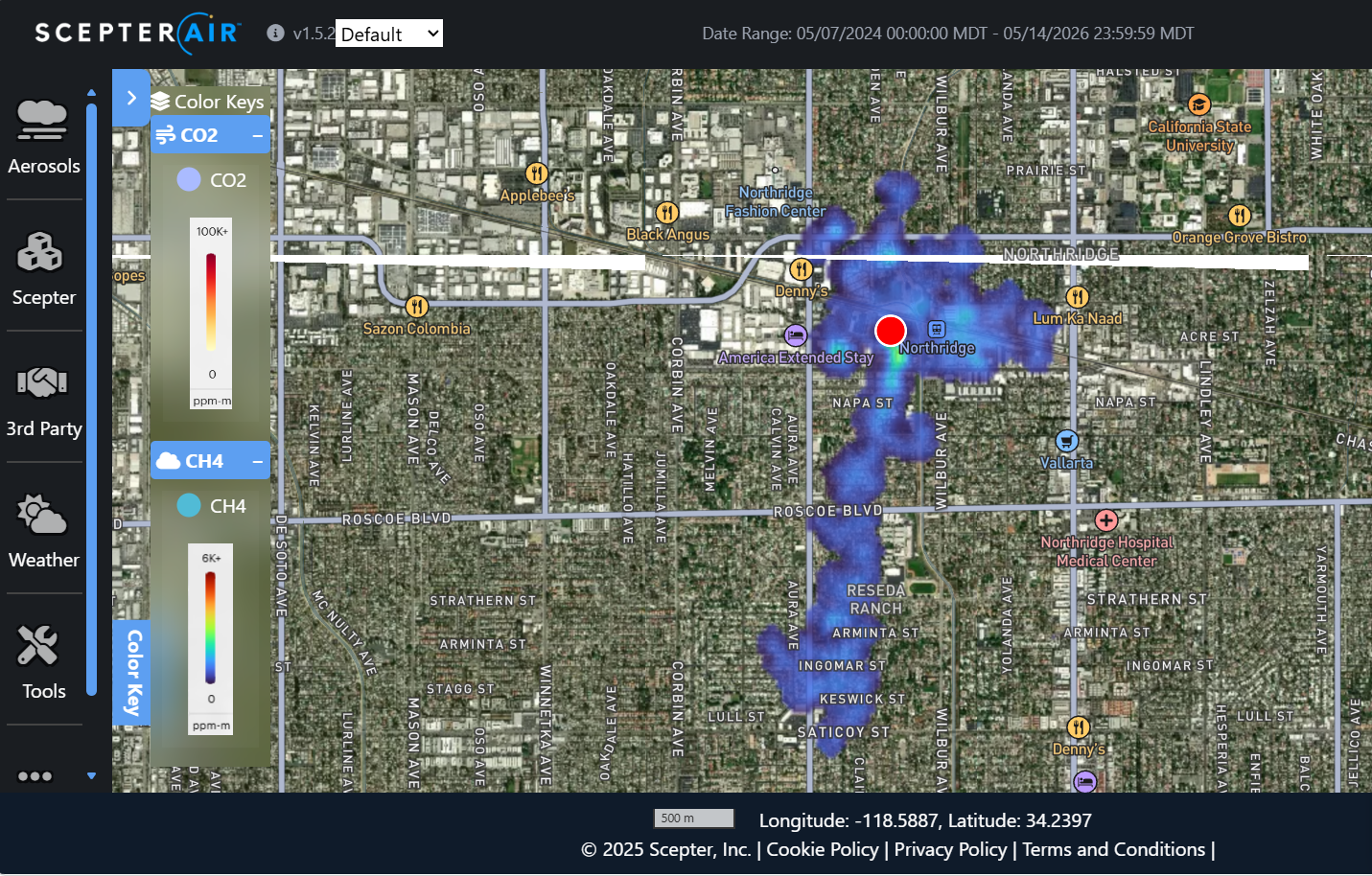
Traditional monitoring systems, relying on isolated sensors or delayed reporting, are inadequate to detect or locate atmospheric and surface anomalies relevant for security and safety monitoring rapidly or comprehensively. Without timely, multi-scale observation, leaks go unmitigated, resources remain undiscovered, clandestine facilities remain undetected, and hazardous releases can spread too far before action is taken.

Inside the Scepter Platform

A look at the tools our operators use to plan missions, monitor fleets, and act on real-time atmospheric data.
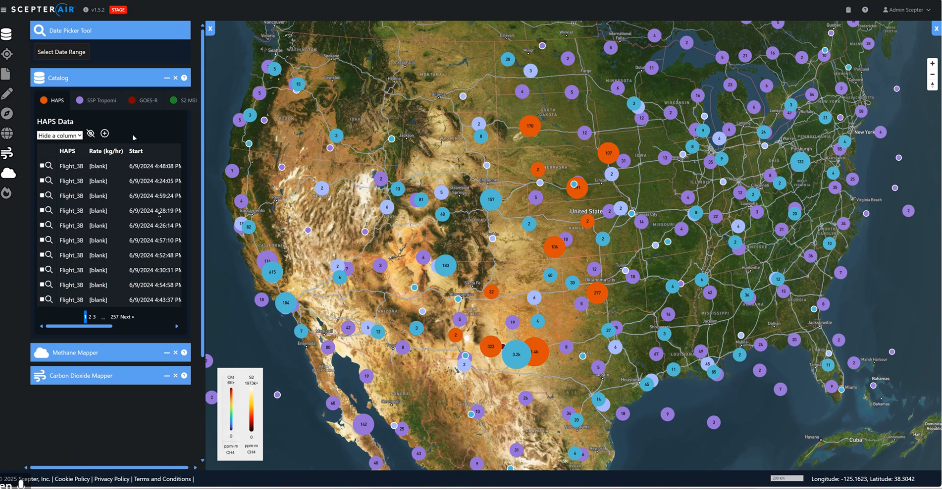
Scepter mission planning console screenshot
Mission Planning Console The operations dashboard used to chart balloon trajectories, set release windows, and coordinate launches against live wind and weather layers.
ScepterAir Release 2 fleet monitoring interface
ScepterAir Release 2 The fleet monitoring view in our latest ScepterAir release, showing telemetry, altitude, and health status for every active platform at a glance.
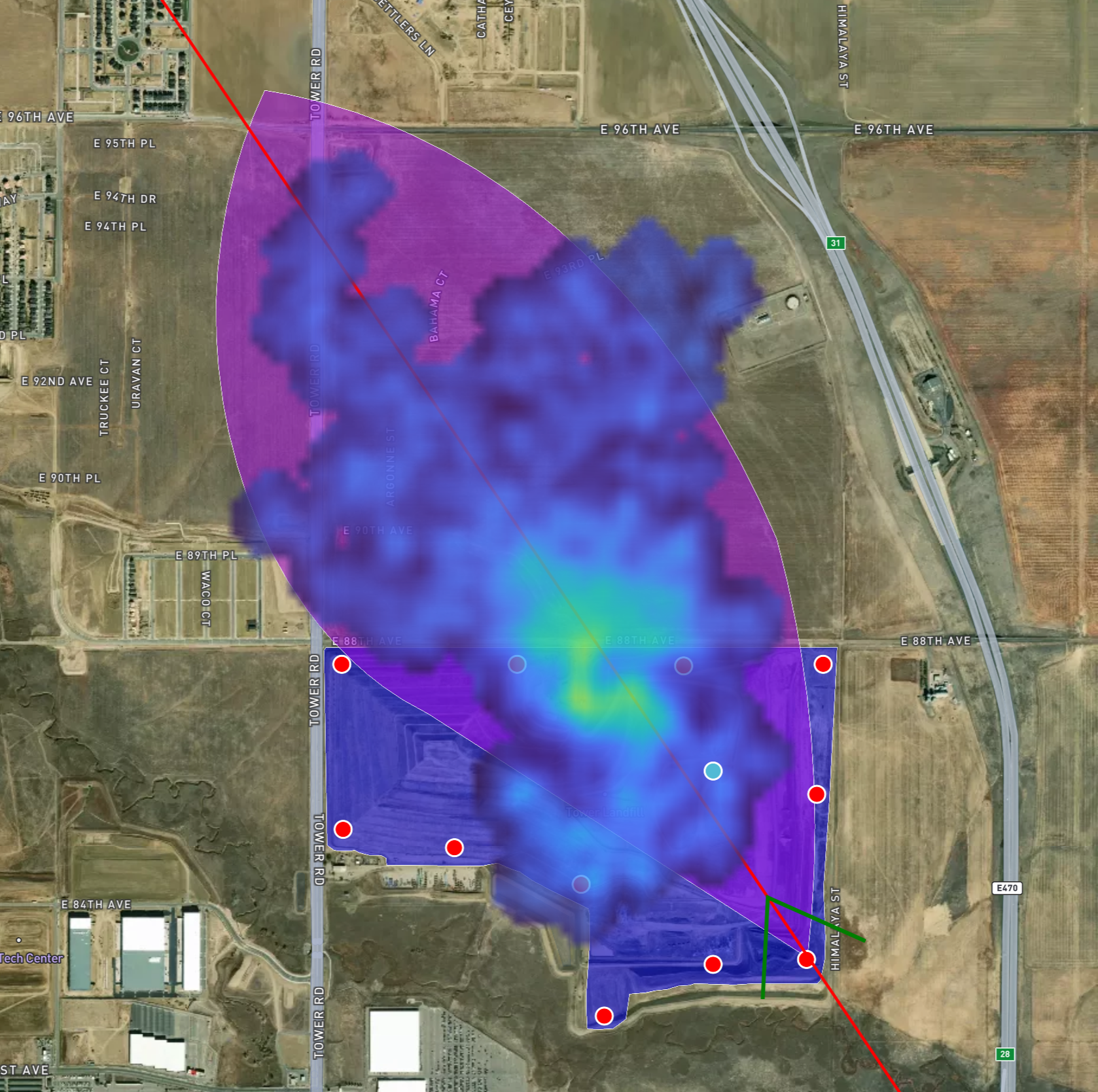
Scepter atmospheric data analytics screenshot
Atmospheric Data Analytics A detailed analytics workspace where collected sensor data is visualized, compared across regions, and exported for downstream forecasting and research.